

Titolo/Title: UN MARE MOLTO PICCOLO
> Premio AAMOD
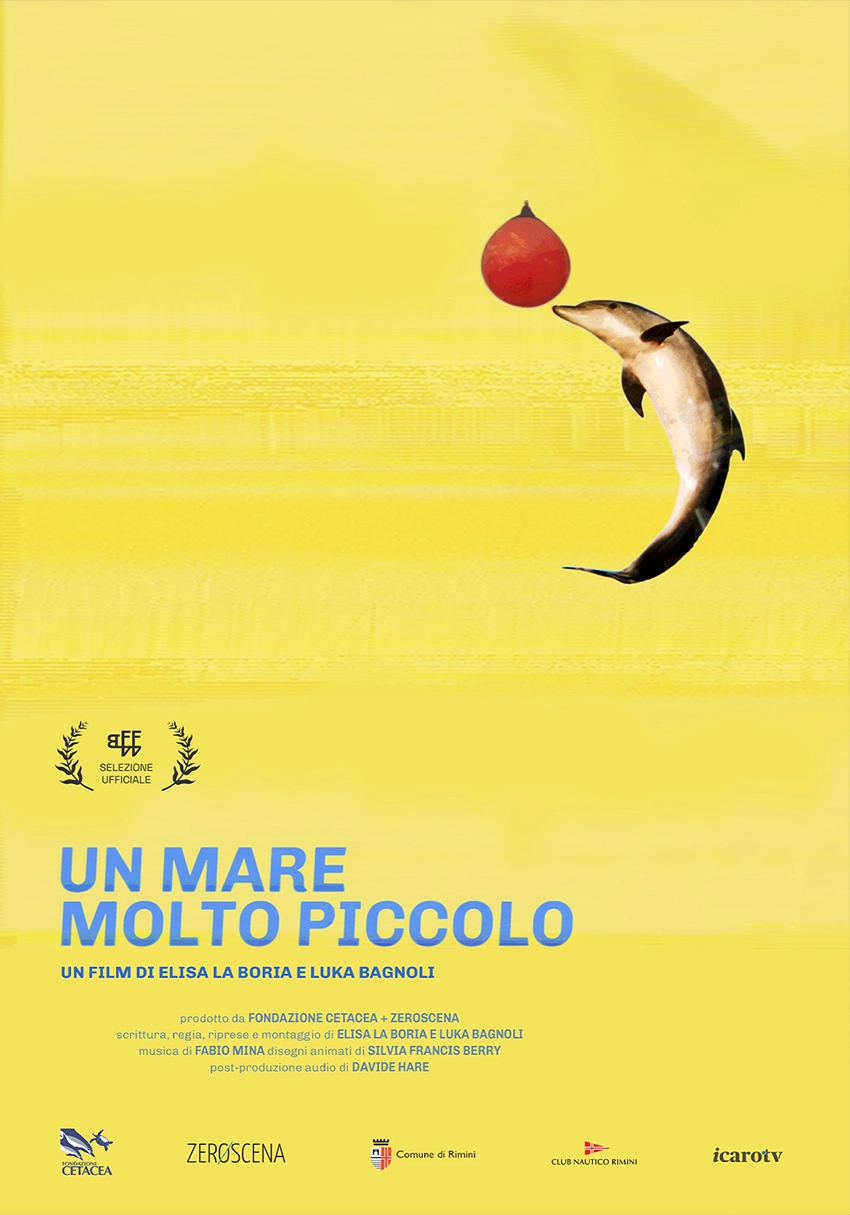
DIRETTO DA/DIRECTED BY: ELISA LA BORIA, LUKA BAGNOLI
PRODOTTO DA/PRODUCED BY: ZEROSCENA / FONDAZIONE CETACEA
MONTAGGIO/EDITING: ELISA LA BORIA, LUKA BAGNOLI
DIRETTORE DELLA FOTOGRAFIA/D.O.P: ELISA LA BORIA, LUKA BAGNOLI
MUSICA/MUSIC: FABIO MINA
SUONO/SOUND: DAVIDE HARE
DURATA/RUNNING TIME: 66’
PAESE DI PRODUZIONE/COUNTRY OF PRODUCTION: ITALY
CONTATTI/CONTACT: zeroscena@gmail.com
LINGUA/LANGUAGE: Italian
SUB: Eng
Sinossi: Nel 2013 la vicenda del Delfinario di Rimini termina bruscamente: i delfini che abitavano la struttura vengono sequestrati dalle autorità a seguito di una denuncia per maltrattamento.
Un vasto archivio di VHS racconta la vita di quegli animali. Voci e usanze del passato incontrano la Riviera Romagnola oggi, dove il turismo di massa resta un ricordo mitico e il rapporto con il mare si trasforma.
Synopsis: In 2013, the story of the Rimini Dolphinarium came to an abrupt end when the dolphins living there were seized by the authorities following allegations of animal mistreatment. A vast archive of VHS tapes recounts the lives of those animals. Voices and customs from the past intersect with today’s Romagna Riviera, where the era of mass tourism has become an almost mythical memory and the relationship with the sea continues to evolve.
Biofilmografia: Elisa La Boria (Latisana, 1998) e Luka Bagnoli (Rimini, 1998) sono un duo artistico con base a Venezia. Dal 2020 attivi sotto il nome di Zeroscena, lavorano con il cinema e le arti visive, spesso rielaborando materiali d’archivio. Un mare molto piccolo (2026) è il loro primo lungometraggio documentario, presentato in anteprima durante la 44a edizione del Bellaria Film Festival.
Biofilmography: Elisa La Boria (Latisana, 1998) and Luka Bagnoli (Rimini, 1998) are an artistic duo based in Venice. Active since 2020 under the name Zeroscena, they work in film and the visual arts, often reworking archival material. Un mare molto piccolo (2026) is their first feature-length documentary, which premiered during the 44th edition of the Bellaria Film Festival.
Motivazioni giuria
Un film che si distingue per l’utilizzo consapevole e critico di materiali d’archivio in formato VHS – provenienti da Fondazione Cetacea Onlus, Icaro TV, Famiglia Bedetti, Martina Resch e Raffaella Tizzi. Il film documenta oltre trent’anni di storia del Delfinario di Rimini: dalle nascite di Luna (1990), Sole (1993), Luna 2 (1995), Blue (1997) alle morti premature di alcuni di loro. I delfini muoiono e nessuno li ha liberati. La vasca del delfinario diventa così metafora di una gabbia dorata, che la società per trent’anni ha guardato applaudendo senza intervenire. L’archivio si trasforma in un atto di accusa postumo.
Per questi motivi, l’Archivio Audiovisivo del Movimento Operaio e Democratico riconosce in “Un Mare Molto Piccolo” il film meritevole del nostro premio.
Jury motivations
A film that stands out for its conscious and critical use of VHS archival materials sourced from Fondazione Cetacea Onlus, Icaro TV, the Bedetti family, Martina Resch, and Raffaella Tizzi. The film documents more than thirty years of the history of the Rimini Dolphinarium: from the births of Luna (1990), Sole (1993), Luna 2 (1995), and Blue (1997) to the premature deaths of some of them. The dolphins died, and no one set them free. The dolphinarium pool thus becomes a metaphor for a gilded cage, one that society watched and applauded for thirty years without intervening. The archive is transformed into a posthumous act of accusation.
For these reasons, the Audiovisual Archive of the Workers’ and Democratic Movement recognizes Un Mare Molto Piccolo (A Very Small Sea) as the film deserving of our award.