

Titolo/Title: CORAZÓN DE CARTÓN
> 1° Premio Animazioni
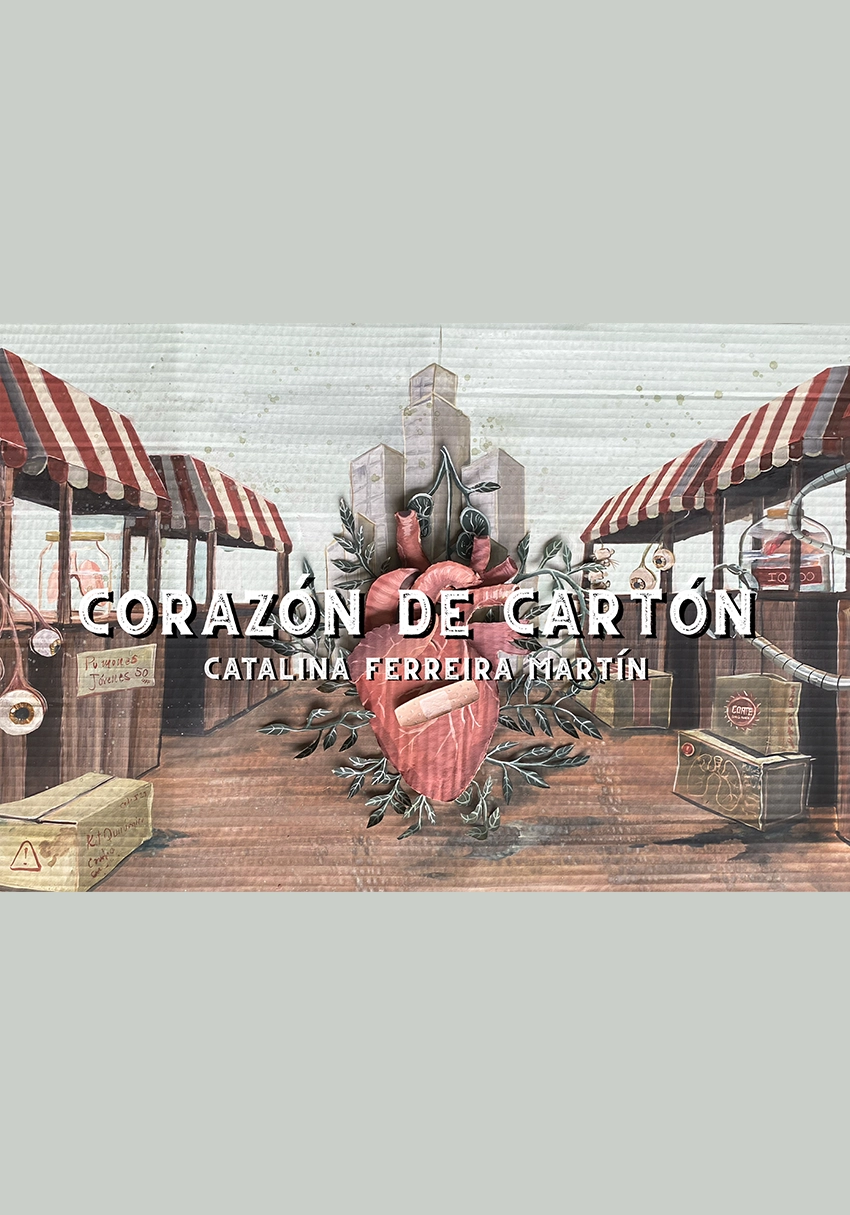
DIRETTO DA/DIRECTED BY: CATALINA FERREIRA MARTÍN
PRODOTTO DA/PRODUCED BY:CATALINA FERREIRA MARTÍN
MONTAGGIO/EDITING: CATALINA FERREIRA MARTÍN
DURATA/RUNNING TIME: 2’
PAESE DI PRODUZIONE/COUNTRY OF PRODUCTION: COLOMBIA, SPAIN
CONTATTI/CONTACT: catalinaferreiramartin@gmail.com
LINGUA/LANGUAGE: No dialogue
Sinossi: Un padre vende un organo in un mondo surreale di cartone per sostenere suo figlio. Attraverso immagini artigianali, il film esplora la disuguaglianza estrema, la mercificazione del corpo e il fragile confine tra sopravvivenza e dignità.
Synopsis: A father sells one of his organs in a surreal cardboard world to support his son. Through andcrafted imagery, the film explores extreme inequality, the commodification of the body, and the fragile line between survival and dignity.
Filmografia/Filmography:
2025: Corazón de Cartón
Premi/Awards:
2026: Rome Prisma Film Awards – Best Animated Short Film
2026: Brooklyn Film Festival – Official Selection
2026: LAUS Awards
Motivazioni giuria
Cartone, carta e pittura a mano, materiali poveri e riciclati, diventano parte integrante della narrazione attraverso un’animazione in stop motion di grande artigianalità. In pochi minuti il cortometraggio ci proietta in una realtà apparentemente lontana, un mercato di robot in cui si vendono organi: uno scenario che sembra fantascienza, ma che racconta una lotta per la sopravvivenza così estrema da spingere un padre a mercificare il proprio corpo. L’opera affronta con grande originalità il tema del consumismo, mostrando come i corpi vengano trattati alla stregua delle risorse naturali, in una critica feroce a un sistema che non rispetta né la dignità umana né l’ambiente. Il finale, infine, lascia spazio alla speranza, simboleggiando la capacità della vita e della natura di resistere anche di fronte alla distruzione.
Jury motivations
Cardboard, paper, and hand-painted elements—humble, recycled materials—become an integral part of the storytelling through a highly crafted stop-motion animation. In just a few minutes, the short film transports us into an apparently distant reality: a marketplace of robots where organs are bought and sold. Although it may seem like science fiction, the film portrays a struggle for survival so extreme that it drives a father to commodify his own body. With remarkable originality, the work addresses the theme of consumerism, showing how bodies are treated in much the same way as natural resources, offering a scathing critique of a system that respects neither human dignity nor the environment. Finally, the ending leaves room for hope, symbolizing the ability of life and nature to endure even in the face of destruction.