
Titolo/Title: UNE VIE EN ROSE
> Premio Greenpeace Italia
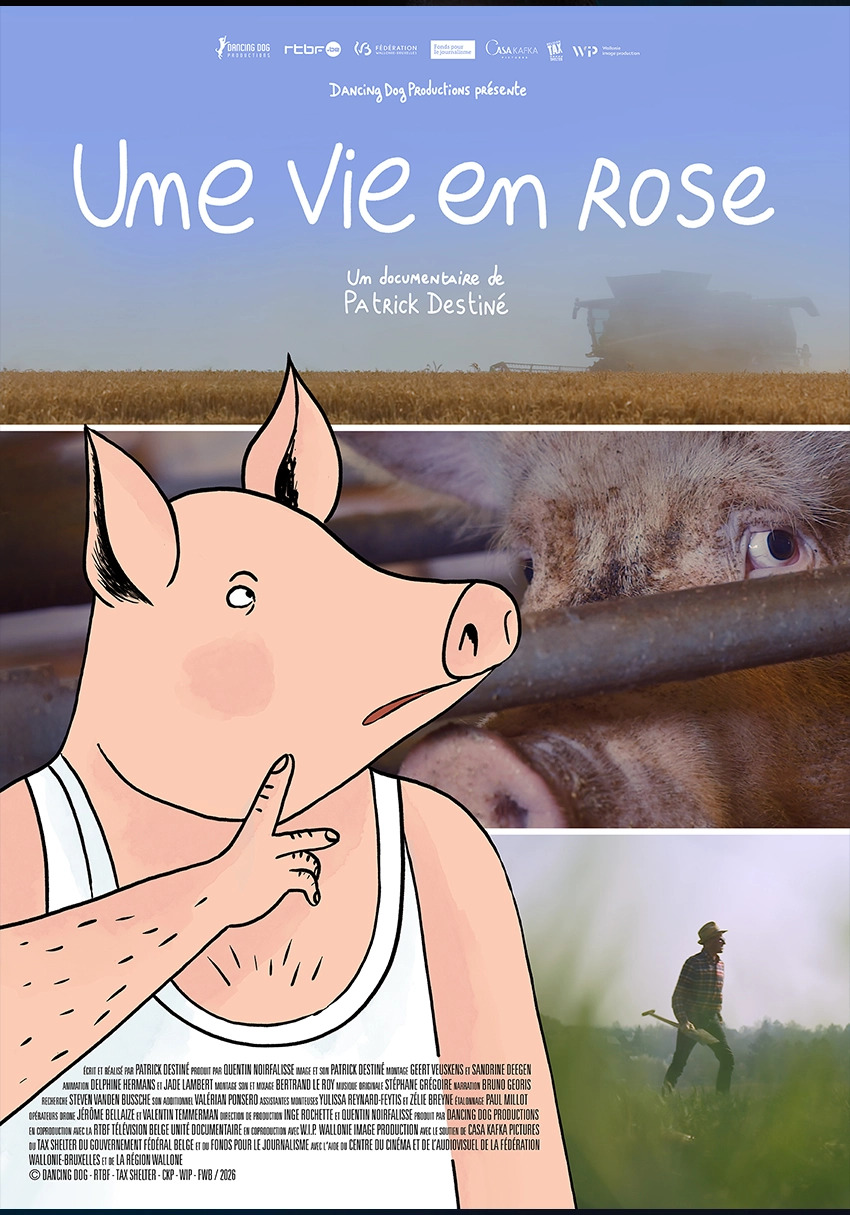
DIRETTO DA/DIRECTED BY: PATRICK DESTINÉ
PRODOTTO DA/PRODUCED BY: DANCING DOG
PRODUCTIONS
MONTAGGIO/EDITING: GEERT VEUSKENS
DIRETTORE DELLA FOTOGRAFIA/D.O.P: PATRICK DESTINÉ
MUSICA/MUSIC: STÉPHANE GRÉGOIRE
SUONO/SOUND: BERTRAND LE ROY
DURATA/RUNNING TIME: 72’
PAESE DI PRODUZIONE/COUNTRY OF PRODUCTION: BELGIUM
CONTATTI/CONTACT: patrick.destine3@gmail.com
LINGUA/LANGUAGE: French, English, Dutch, Danish
SUB: Ita
Sinossi: Ogni anno mangiamo 40 chili di maiale. Di fronte a questa dipendenza, l’allevamento si è massicciamente industrializzato. Le Vie en Rose vi porta dietro le quinte. Gli allevatori belgi condividono la loro passione, i cittadini della Bretagna denunciano l’inquinamento dell’industria suina e un’antropologa danese indaga sugli allevamenti irragionevoli.
Synopsis: Every year, we eat 40 kilograms of pork. Faced with this dependence, the pig farming industry has become heavily industrialized.
La Vie en Rose takes us behind the scenes. Belgian pig farmers share their passion, residents of Brittany speak out against pollution caused by the pork industry, and a Danish anthropologist investigates the excesses of industrial livestock farming.
Biofilmografia: Patrick Destiné è un regista e direttore della fotografia con sede a Bruxelles, formatosi all’Institut des Arts de l’Audiovisuel di Louvain-La-Neuve e specializzato da allora in documentari e film d’inchiesta. Collabora con la RTBF e diverse case di produzione. Il suo documentario Mission Castor (2023) ha ricevuto lo SCAM Star Award ed è stato selezionato per diversi festival internazionali, tra cui il Fipadoc. Attraverso il suo lavoro, esplora tematiche sociali, ambientali e umane.
Biofilmography: Patrick Destiné is a Brussels-based filmmaker and cinematographer who trained at the Institut des Arts de l’Audiovisuel in Louvain-La-Neuve and has since specialized in documentaries and investigative films. He collaborates with RTBF and various production companies. His documentary Mission Castor (2023) received the SCAM Star Award and was selected for several international festivals, including Fipadoc. Through his work, he explores social, environmental, and human issues.
Motivazioni giuria
Per la capacità di raccontare, con chiarezza e forza, l’altra faccia dell’allevamento industriale: un sistema che si presenta come efficiente e sostenibile, ma che scarica i propri costi su animali, persone, territori ed ecosistemi.
Attraverso il caso della filiera suina, il documentario mostra come la logica della produzione intensiva non produca solo sofferenza animale, ma anche crisi sociale per gli allevatori, concentrazione economica, inquinamento da nitrati, contaminazione delle coste e rischi per la salute pubblica. Particolarmente efficace è il racconto delle spiagge bretoni invase dalle alghe verdi, conseguenza visibile e drammatica di un modello agricolo che ha superato i limiti ecologici dei territori.
Il film ha il merito di non isolare il problema, ma di inserirlo dentro una riflessione più ampia sul potere dell’agroindustria, sulle false narrazioni di sostenibilità e sul greenwashing della carne. In questo senso, Lipstick on a Pig rende visibili i costi nascosti di un sistema produttivo che prova a rendersi accettabile senza mettere davvero in discussione le proprie responsabilità.
Per Greenpeace, premiare questo documentario significa riconoscere un’opera che contribuisce a smascherare le contraddizioni dell’allevamento intensivo e a riportare al centro del dibattito pubblico la necessità di una trasformazione profonda del sistema alimentare, a tutela del clima, della biodiversità, della salute e della giustizia ambientale.
Jury motivations
For its ability to tell, with clarity and impact, the other side of industrial livestock farming: a system that presents itself as efficient and sustainable, while shifting its costs onto animals, people, communities, and ecosystems.
Through the case of the pork production chain, the documentary shows how the logic of intensive production generates not only animal suffering, but also social hardship for farmers, economic concentration, nitrate pollution, coastal contamination, and risks to public health. Particularly powerful is its portrayal of the Breton beaches overwhelmed by green algae—a visible and dramatic consequence of an agricultural model that has exceeded the ecological limits of the territories in which it operates.
The film’s strength lies in its refusal to isolate the issue, instead placing it within a broader reflection on the power of agribusiness, the false narratives of sustainability, and the greenwashing of meat production. In this sense, Lipstick on a Pig makes visible the hidden costs of a production system that seeks public acceptance without genuinely questioning its own responsibilities.
For Greenpeace, awarding this documentary means recognizing a work that helps expose the contradictions of intensive livestock farming and brings back to the center of public debate the need for a profound transformation of the food system—one that safeguards the climate, biodiversity, public health, and environmental justice.

Cinema
Letteratura
Musica
Sulla spiaggia, in riva al mare.
Vi aspettiamo a San Vito Lo Capo.
Contatti
©2026 SiciliAmbiente Film Festival | Design by FP