

Titolo/Title: LOST STARS OF THE HOROSCOPE
> Premio Amnesty International Italia
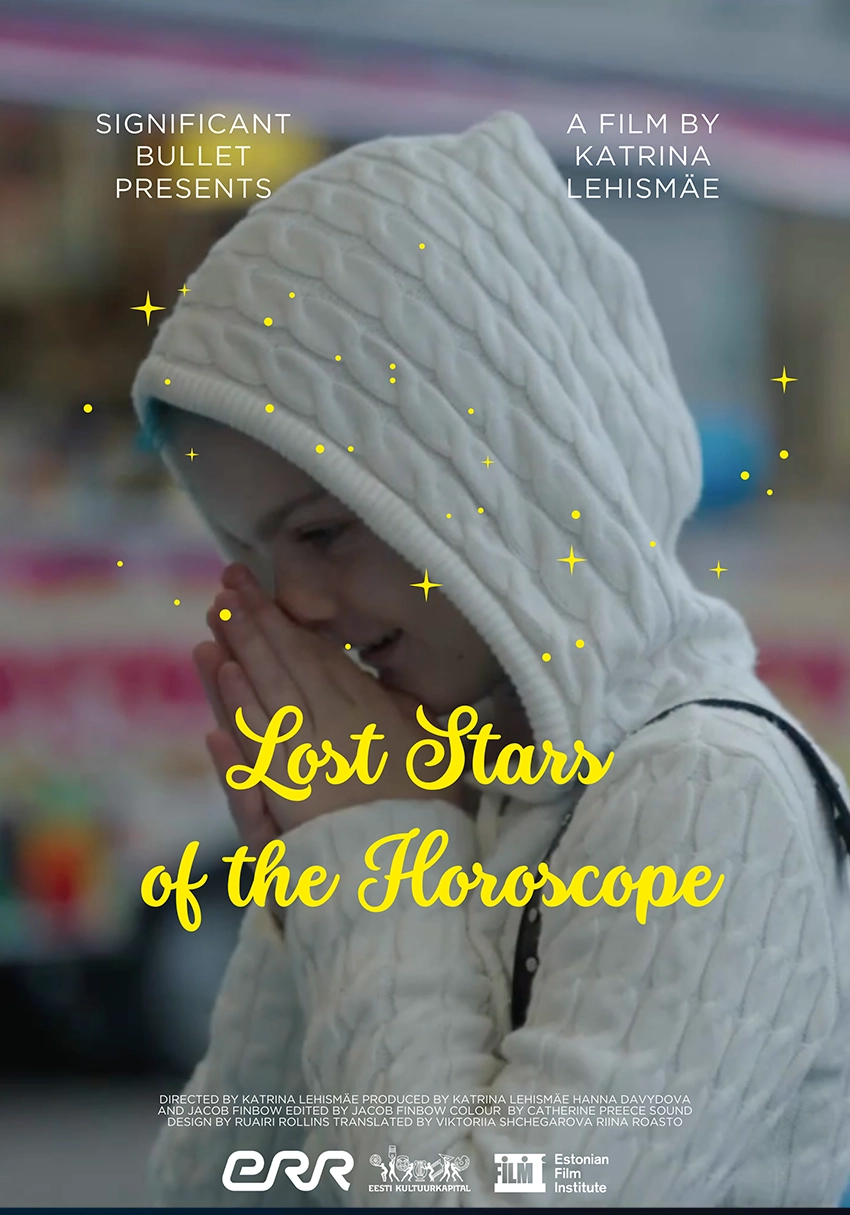
DIRETTO DA/DIRECTED BY: KATRINA LEHISMÄE
PRODOTTO DA/PRODUCED BY: JACOB FINBOW / SIGNIFICANT BULLET PRODUCTIONS
CAST: MARIIA SAVCHENKO
MONTAGGIO/EDITING: JACOB FINBOW
DIRETTORE DELLA FOTOGRAFIA/D.O.P: KATRINA LEHISMÄE
MUSICA/MUSIC: MOBY GRATIS
SUONO/SOUND: RUAIRI ROLLINS
DURATA/RUNNING TIME: 73’
PAESE DI PRODUZIONE/COUNTRY OF PRODUCTION: ESTONIA
CONTATTI/CONTACT: katrina.lehismae@gmail.com
LINGUA/LANGUAGE: Ukrainian, Estonian, Russian, English
SUB: Ita
Sinossi: Sfollate a causa della guerra in Ucraina, tre ragazze – Iryna, Sasha e Masha – cercano di ricostruire le loro vite in Estonia. Mentre Masha si aggrappa ai ricordi di casa, Sasha fa del suo meglio per integrarsi e Iryna affronta la barriera linguistica a scuola.
Questo documentario intimo si concentra sui momenti tranquilli della vita quotidiana, in cui l’incertezza si mescola alla speranza, mostrando come i giovani cerchino sicurezza in un mondo improvvisamente cambiato.
Synopsis: Displaced by the war in Ukraine, three girls—Iryna, Sasha, and Masha—struggle to rebuild their lives in Estonia. While Masha clings to memories of home, Sasha does her best to integrate, and Iryna faces a language barrier at school. This intimate documentary focuses on the quiet moments of everyday life, where
uncertainty intertwines with hope, revealing how young people seek a sense of safety in a world that has suddenly changed.
Biofilmografia: Katrina Lehismäe è una regista di documentari estone che vive a Londra. Ha lavorato principalmente come regista per la televisione britannica, concentrandosi su narrazioni
socialmente impegnate. Recentemente ha fatto il suo ingresso nel circuito cinematografico internazionale con il suo lungometraggio d’esordio, Lost Stars of the Horoscope. Dalla sua anteprima mondiale al Tallinn Black Nights Film Festival, accreditato dalla FIAPF, il documentario è stato selezionato per il Visions du Réel
Film Market e proiettato al Consiglio d’Europa a Strasburgo. La sua opera, incentrata sul pluripremiato cortometraggio The Passing, continua ad analizzare l’attrito tra identità personale e mutevoli scenari geopolitici.
Biofilmography: Katrina Lehismäe is an Estonian documentary filmmaker based in London. She has worked primarily as a director for British television, focusing on socially engaged. She recently made her debut on the international film circuit with her feature-length debut, Lost Stars of the Horoscope. Since its world premiere at the FIAPF-accredited Tallinn Black Nights Film Festival, the documentary has been selected for the Visions du Réel Film Market and screened at the Council of Europe in Strasbourg. Her work, which builds on her award-winning short film The Passing, continues to explore the tension between personal identity and shifting geopolitical landscapes.
Motivazioni giuria
Un film che si distingue per l’utilizzo consapevole e critico di materiali d’archivio in formato VHS – provenienti da Fondazione Cetacea Onlus, Icaro TV, Famiglia Bedetti, Martina Resch e Raffaella Tizzi. Il film documenta oltre trent’anni di storia del Delfinario di Rimini: dalle nascite di Luna (1990), Sole (1993), Luna 2 (1995), Blue (1997) alle morti premature di alcuni di loro. I delfini muoiono e nessuno li ha liberati. La vasca del delfinario diventa così metafora di una gabbia dorata, che la società per trent’anni ha guardato applaudendo senza intervenire. L’archivio si trasforma in un atto di accusa postumo.
Per questi motivi, l’Archivio Audiovisivo del Movimento Operaio e Democratico riconosce in “Un Mare Molto Piccolo” il film meritevole del nostro premio.
Jury motivations
A film that stands out for its conscious and critical use of VHS archival materials sourced from Fondazione Cetacea Onlus, Icaro TV, the Bedetti family, Martina Resch, and Raffaella Tizzi. The film documents more than thirty years of the history of the Rimini Dolphinarium: from the births of Luna (1990), Sole (1993), Luna 2 (1995), and Blue (1997) to the premature deaths of some of them. The dolphins died, and no one set them free. The dolphinarium pool thus becomes a metaphor for a gilded cage, one that society watched and applauded for thirty years without intervening. The archive is transformed into a posthumous act of accusation.
For these reasons, the Audiovisual Archive of the Workers’ and Democratic Movement recognizes Un Mare Molto Piccolo (A Very Small Sea) as the film deserving of our award.